
One April morning in Istanbul, a pensive Marie Klock was halfway through giving herself a pedicure when the apartment walls began to sway. Unsure whether to panic or simply rebalance, she finished the second foot first, then checked her phone. A message from Anadol (Gözen Atila) urged her to come to a nearby park — a safe place during earthquakes. They spent the rest of the day there drinking tea, and the writer’s block that had stalled Klock quietly lifted.
Manivelles, the second album by composer Anadol and writer-musician Marie Klock, followed a very different trajectory from their 2024 debut. Where La grande accumulation was born of a whirlwind encounter and leaned into spontaneous invention and surreal imagery, this record draws its material from lived experience and a lasting friendship. Its title, which means ‘cranks’, hints at the musical partners’ creative penchant for generating songs through friction and playful contradictions.
Hailed by The Quietus as “a quirky pop duo in which each half pushes the other to greater heights of oddness,” Anadol and Klock produce an undefinable mix of folk, kraut, and pop music nested inside expansive organ-based arrangements. Much of the album’s instrumentation emerged during an intensive series of improvisations in two Paris studios, where they made use of unfamiliar and sometimes extravagant equipment (Prophet-5, Jupiter-6, Space Echo, Hohner Pianet…). On “Sans Toi”, for instance, the Pianet’s mechanical clatter was left intact –and even amplified–, lending weight to the melody’s sense of longing.
A second round of sessions later took place in Anadol’s studio in Istanbul. There, the duo drew from her large collection of obscure keyboard tones, rhythms and samples (recordings of ruminants pulled from unidentifiable sound libraries, a salad spinner repurposed as a drone…), weaving them into rich, subtly off-kilter compositions.
Fast forward to that cathartic day in the park. Klock’s French lyrics navigate the miniature and the cosmic, and her vocals were intended to anchor the record. But accumulated anguish kept her from accessing her voice—that is, until the ground shifted and it suddenly burst out on “Symposium”. Written as a pastiche of a self-satisfied editorialist and shouted into the microphone, the song marked a turning point. “Henri”, a gentle, repetitive lullaby addressed to her grandfather, followed as a counterweight.
The nine pieces that make up Manivelles evoke the small tragedies of everyday life in song or spoken word: botched holiday gatherings, lingering heartbreak or the absence of a loved one. The opening track, “La supériorité du nombre”, meanders through waves of inflation, buoyed on by a steady beat flecked with curious timbres, “Magnitude 6.3” pours sea-worn dreams into a pop-leaning vessel, while “Une grande tragédie polonaise” pulses with heartbreak through sparse synth figures, blinking like faint signals from a failed transmitter.
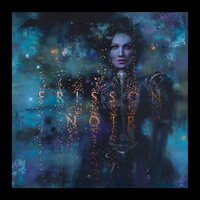
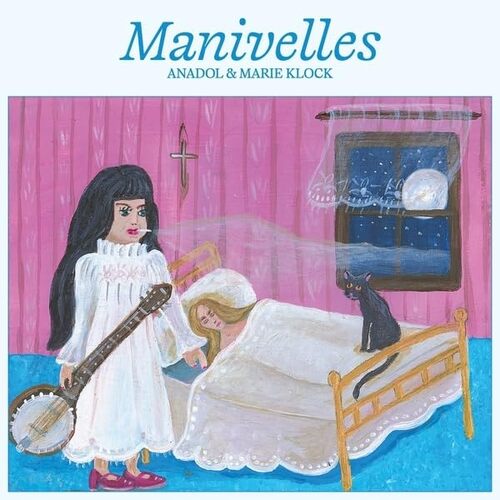
The album’s final character owes much to the mixing of Gökalp Kanatsız, who also plays the bass synth on “Sans Toi.” Additional performances come from Durukan Betses (drums), Nedim Ulusoy (saxophone), and Alexei Tintaru (bass). The artwork is taken from a 2025 painting by Irish folk artist Sarah Theresa Lee, The Haunting of Faggedy Anne…— less an illustration than a mirror, capturing the spiritual and physical state of the artists during the album’s creation.
- 1. La supériorité du nombre
- 2. Magnitude 6.3
- 3. Manivelles
- 4. Rentrer à la maison
- 5. Henri
- 6. Les histoires véritables de Gözen et Marie
- 7. Une grande tragédie polonaise
- 8. Sans toi
- 9. Symposium